


Coffee beans aren’t beans. They’re seeds - the pit of a small fruit called the coffee cherry.
Every cup of coffee ever brewed started as a cherry growing on a tree. The fruit was picked, the seed was extracted, and that seed was dried, shipped, roasted, ground, and brewed into the final drink. The fruit itself? On most farms, it’s composted or thrown away.
That’s starting to change. The coffee cherry has its own flavor, its own nutritional profile, and a centuries-old tradition as a brewed beverage in its own right. Here’s what it is, how it works, and why it matters.

What a Coffee Cherry Looks Like
A coffee cherry is a small, oval fruit about the size of a grape. It grows in clusters along the branches of the coffee tree (genus Coffea), turning from green to yellow to bright red as it ripens. Some varieties ripen to orange or even deep purple.
The cherry has several layers:
Outer skin (exocarp): The thin, glossy exterior. Green when unripe, red when ripe on most varieties.
Pulp (mesocarp): A thin layer of sweet, slightly sticky fruit flesh between the skin and the seed. This is the part that tastes fruity - sweet with a mild tartness, nothing like the coffee that comes from the seed inside.
Mucilage: A slippery, sugary layer that coats the seed. During processing, this layer plays a critical role in flavor development, particularly in natural and honey-processed coffees.

Parchment (endocarp): A papery husk that encases the seed. This is removed during milling.
Silver skin (spermoderm): An extremely thin membrane around the seed. Small pieces of silver skin (called chaff) come off during roasting - visible on lighter roasted beans.
The seed: This is what is commonly called the coffee bean. Most cherries contain two seeds (flat beans) facing each other. Occasionally, a cherry produces a single, rounded seed - that’s a peaberry.
From Cherry to Cup: How Coffee Is Processed
The processing method - how the seed is separated from the fruit - has a massive impact on what the coffee tastes like. Three primary methods dominate:
Washed (Wet) Process
The cherries are pulped (skin and pulp removed) within hours of picking. The mucilage-coated seeds are then fermented in water tanks for 12–72 hours to break down the remaining sticky layer. After washing, the beans are dried.
Result: Clean, bright, acidic coffees where the bean’s inherent character comes through clearly. Most Central American, Colombian, and East African coffees use this method. Many Hawaiian coffees, including most Kona coffees, are wet-processed.
Natural (Dry) Process
The entire cherry - skin, pulp, and all - is spread on raised beds or patios and dried in the sun for 2–4 weeks. The seed dries inside the fruit, absorbing flavors from the pulp and mucilage as it goes. Once fully dry, the fruit is mechanically stripped away.
Result: Full-bodied, fruity, sometimes winey coffees with lower acidity and heavier mouthfeel. Ethiopian naturals are the most famous examples. The fruit-forward flavors come directly from the extended contact between the seed and the cherry.
Honey Process
A middle ground. The skin is removed, but some or all of the mucilage is left on the seed during drying. The amount of mucilage left determines the “color” of the honey process: white (least mucilage), yellow, red, or black (most mucilage).
Result: Sweet, balanced coffees that combine the clarity of washed processing with some of the body and fruitiness of naturals.
The practical takeaway: when a naturally processed coffee is described as "fruity," that character comes directly from the cherry. The fruit isn't just a vehicle for the seed — it's an active participant in flavor development. The Light/Medium/Dark Roast Guide covers how roasting then shapes those flavors further.
What Coffee Cherries Taste Like
A ripe coffee cherry eaten straight from the tree is sweet and pleasant - a bit like a mild cranberry or a ripe cherry with less juice. The pulp is thin (there’s not much to eat), and the seeds are large relative to the fruit.
The flavor varies by variety, growing conditions, and ripeness. Ripe cherries from well-maintained trees are noticeably sweeter than underripe or overripe fruit. This is one reason why selective hand-picking (harvesting only ripe cherries) produces better coffee than strip-picking (taking everything at once).
Hawaiian coffee cherries tend to have a mild, clean sweetness. The volcanic soil and elevation of Maui and the Kona Belt produce fruit with enough sugar content to translate into smooth, nuanced coffees regardless of processing method.
Coffee Cherry Tea (Cascara)
The dried skin and pulp of the coffee cherry can be brewed into a tea-like drink called cascara (from the Spanish cáscara, meaning “husk” or “peel”). In Ethiopia and Yemen, versions of this drink - called qishr and hashara - have been consumed for centuries, possibly before anyone thought to roast the seeds.
Modern cascara was popularized around 2005 by Salvadoran coffee farmer Aida Batlle, who noticed that the discarded cherry husks from her mill had a pleasant, floral aroma and began drying and packaging them for export.
What cascara tastes like: Sweet, fruity, and tea-like. Common tasting notes include rosehip, hibiscus, cherry, red currant, and dried fruit. It tastes nothing like coffee - it’s closer to a fruit tisane.
Caffeine in cascara: Moderate. A cup of cascara contains roughly 25mg of caffeine - about a quarter of what a cup of coffee provides and similar to a cup of black tea. It has enough to provide a mild lift without the intensity of coffee.
Antioxidant content: Research published in the Cambridge University Press found that coffee fruit extracts contain high levels of polyphenols. A small study showed that coffee fruit extract increased BDNF (brain-derived neurotrophic factor) in healthy subjects, though larger studies are needed to confirm this.
How to brew cascara: Steep 2–3 tablespoons of dried cascara in 10–12 ounces of hot water for 4–5 minutes. Strain and serve hot or iced. The brew is forgiving - unlike green tea, it doesn’t turn bitter with longer steep times. Some people add ginger, cinnamon, or nutmeg for a spiced version closer to the traditional Yemeni preparation.
Sustainability angle: Coffee cherry pulp makes up over 50% of the total cherry mass and is typically treated as agricultural waste. Drying and selling cascara creates an additional revenue stream for farmers while reducing waste from the coffee production process.

Why the Cherry Matters for Coffee Quality
The condition of the cherry at harvest directly determines the quality of the coffee in the cup. This is why specialty coffee farms are obsessive about cherry selection:
Ripeness: Ripe cherries (red or deep yellow, depending on variety) contain peak sugar and acid content, which translates to sweetness and complexity in the roasted coffee. Underripe cherries produce astringent, sour coffee. Overripe cherries produce flat, fermented flavors.
Defects: Insect-damaged, diseased, or dried-on-the-tree cherries introduce off-flavors. Quality-focused farms sort cherries multiple times - once during picking, again using water flotation (underripe and defective cherries float), and sometimes a third time by hand on drying tables.
Variety: Just as grape varieties produce different wines, coffee varieties produce different cherries with distinct flavor profiles. Typica, Bourbon, Caturra, Gesha - each variety has its own cherry characteristics that influence the final cup.
Terroir: The same variety grown at different elevations, soil types, and microclimates will produce cherries with different sugar, acid, and compound profiles. This is why Kona coffee tastes different from Colombian coffee, even when the same variety and processing method are used. The volcanic soil of the Kona Belt creates a specific mineral profile that shows up in the cherry - and eventually in the cup.
The Coffee Cherry in Hawaiian Agriculture
Hawaii is one of the few places in the United States where coffee cherries grow commercially. The volcanic soil across Maui, the Big Island, Kauai, and Oahu creates growing conditions that produce some of the most sought-after coffee cherries in the world.
On the Big Island, the Kona Coffee Belt - a narrow strip on the western slopes of Hualalai and Mauna Loa - produces the famous Kona coffee cherries at elevations between 800 and 2,500 feet. The afternoon cloud cover (what locals call “Kona weather”) slows cherry maturation, allowing more complex sugars and acids to develop.
On Maui, farms from Kula to Kaʻanapali to Hāiku grow coffee at various elevations and microclimates. The diversity of growing conditions across a single island means that Maui coffees can range from bright and citrusy (higher elevation) to rich and chocolatey (lower elevation) - all from cherries grown within miles of each other.
Most Hawaiian coffee is wet-processed, which strips the cherry from the seed early and produces the clean, bright cup profile that Hawaiian coffees are known for. A few farms are experimenting with natural and honey processing to create more fruit-forward Hawaiian coffees - a trend worth watching.
Frequently Asked Questions
Can you eat a coffee cherry?
Yes. The fruit is edible and mildly sweet. There’s not much pulp relative to the size of the seed, so it’s not a practical snacking fruit, but it’s safe to eat. Some producers now sell dried whole coffee cherries as a snack - they taste like tart, slightly sweet raisins.
Are coffee cherries the same as regular cherries?
No. The name is just a resemblance - coffee cherries are small, round, and red when ripe, which looks vaguely like a cherry. Coffee (genus Coffea, family Rubiaceae) is botanically unrelated to the cherry tree (genus Prunus, family Rosaceae).
How many coffee cherries does it take to make a cup of coffee?
Roughly 70 cherries produce enough beans for a single cup of coffee. A mature coffee tree yields about 2,000 cherries per year - enough for roughly one pound of roasted coffee.
Is cascara the same as cascara sagrada?
No. Cascara (coffee cherry tea) comes from the dried fruit of the coffee plant. Cascara sagrada is the dried bark of the California buckthorn tree, which is used as a laxative. Completely different plants, completely different products.
Does the coffee cherry have caffeine?
Yes. The coffee cherry flesh contains caffeine, though less than the seed (bean) itself. A cup of cascara tea brewed from dried coffee cherries contains roughly 25mg of caffeine - about a quarter of a standard cup of coffee.
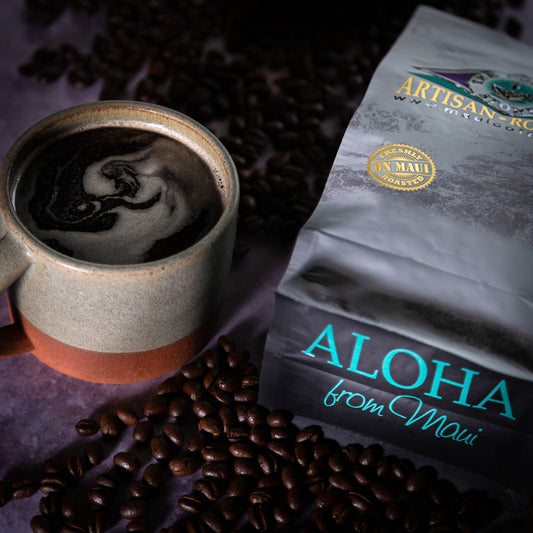
Every bag of coffee we roast started as a cherry on a Hawaiian tree. Browse our 100% Maui Coffee and 100% Kona Coffee collections to taste what Hawaiian-grown cherries produce.


